Anion Gap Calculator for Evaluating Metabolic Alkalosis Evaluation
What Exactly this Anion Gap Reflects
The anion gap is a calculated value that helps clinicians measure the relationship between measured positive ions and measured anion levels in blood chemistry. An Anion Gap Calculator commonly uses serum sodium, serum chloride, and serum bicarbonate from an basic electrolyte panel to determine whether there are extra, unmeasured anions existing in the blood.
In simple terms, the formula gives a rapid overview of acid-base balance. A change in the anion gap can suggest an underlying acid-base disorder, especially when laboratory values do not fully match the patient’s symptoms or the expected body chemistry pattern.
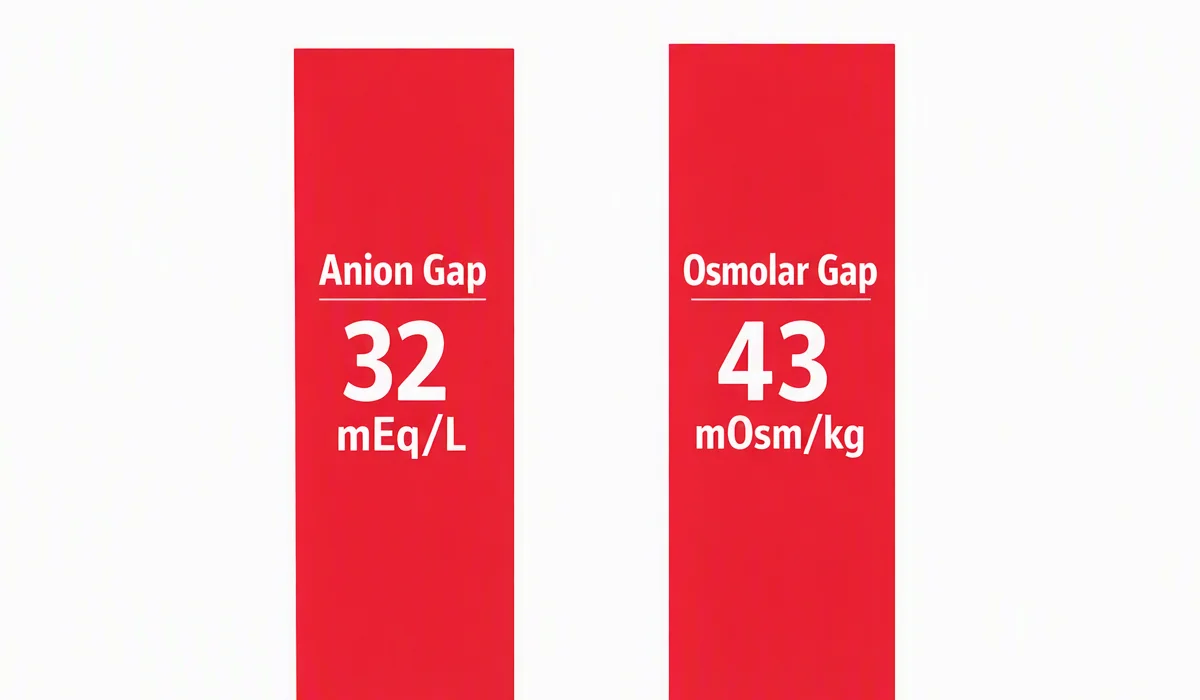
The classic anion gap formula is:
Anion gap = serum sodium − (serum chloride + serum bicarbonate)
Some clinicians and calculators also consider potassium, but most modern interpretation uses sodium, chloride, and bicarbonate because the result is more straightforward to standardize and apply in clinical interpretation.
The value is useful because it helps reveal whether there is an buildup of unmeasured acids, whether there is a shift in chloride depletion, or whether there may be a mixed acid-base disorder that would otherwise be missed on routine review of serum chemistry.
How to Work With an Anion Gap Calculator
An anion gap calculator is only as useful as the data input into it. Start with a current electrolyte panel and check the values for sodium, chloride, and bicarbonate. Precise input matters because even small differences in these laboratory values can affect the final calculation and subsequent interpretation.
When you input the results, match the output to the local reference range. Reference intervals vary by laboratory method and analyzer, so a value that appears abnormal in one system may still be normal in another. This is why the same number should always be reviewed in the context of the reporting lab’s standard.
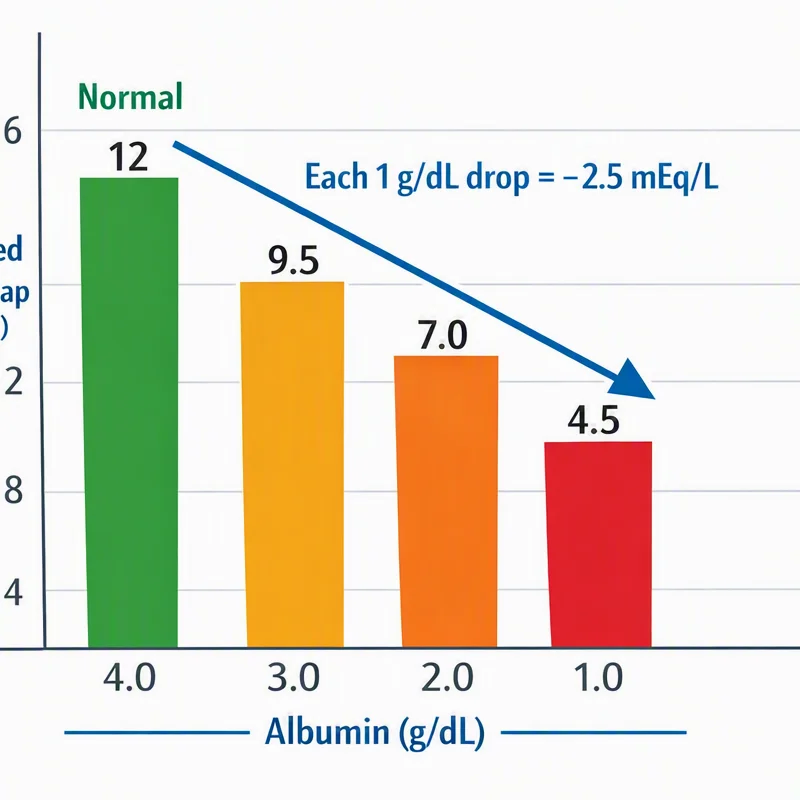
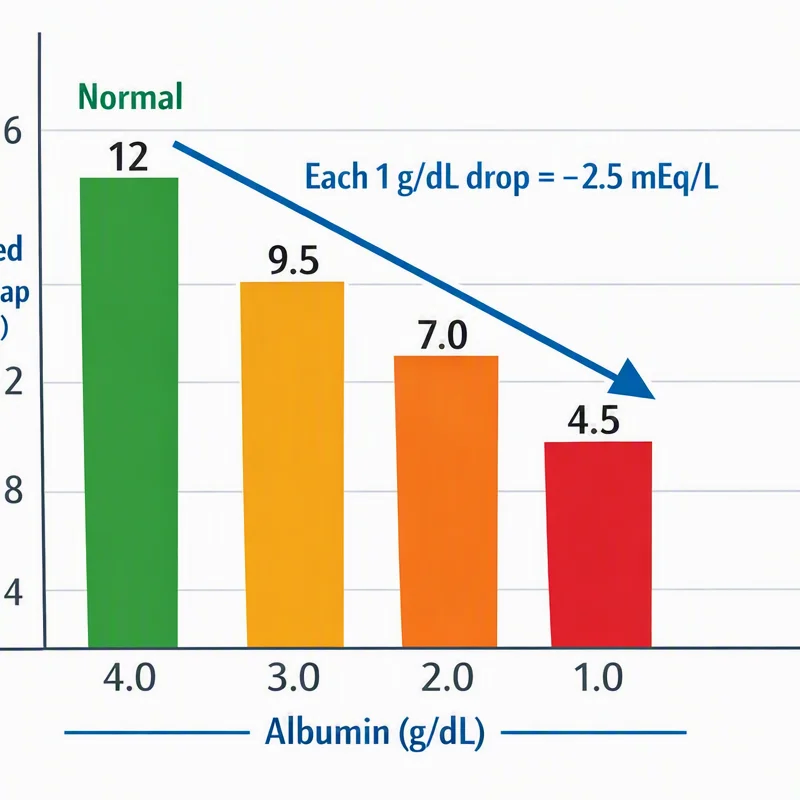
Albumin correction should be used whenever albumin is low. Because albumin contributes negatively charged protein anions, a low albumin level can make the measured anion gap appear falsely normal or low. Correcting for albumin increases diagnostic accuracy and can uncover a clinically important elevation that was hidden by hypoalbuminemia.
A practical workflow is:
- Review the electrolyte panel for sodium, chloride, and bicarbonate.
- Place the numbers into the anion gap calculator.
- Determine whether the result fits the reference range.
- Evaluate albumin and apply albumin correction if needed.
- Analyze the corrected anion gap alongside the patient’s symptoms and acid-base balance.
This approach is especially valuable in critical care and acute settings, where subtle shifts in serum chemistry can indicate major changes in physiology.
Cellular Alkalosis Overview
Metabolic alkalosis is a primary acid-base disorder characterized by an rise in blood bicarbonate and a corresponding increase in pH. An early sign is often seen on a blood pH above the expected range, with elevated serum bicarbonate on chemistry testing. To confirm the pattern and assess compensation, clinicians often rely on an arterial blood gas.
An arterial blood gas provides a broader picture than the chemistry panel alone because it shows pH, carbon dioxide, and oxygenation. In metabolic alkalosis, the body typically responds through respiratory metabolic compensation, leading to a higher carbon dioxide level than expected. The base excess is also often positive, reflecting excess buffer in the system.
Understanding the pattern matters because metabolic alkalosis is not a diagnosis by itself; it is a physiologic finding that requires patient assessment and a search for the underlying etiology. A calculator can support the workup, but the clinical picture remains essential for safe interpretation.
In practice, a patient with vomiting, diuretic exposure, or volume loss may show elevated bicarbonate and alkalemia. Yet the anion gap can still provide insight, especially when the disorder is not isolated or when the expected laboratory pattern does not match the clinical situation.
How the Anion Gap Still Counts in Metabolic Alkalosis
While the anion gap is often discussed in relation to acidosis, it still counts in metabolic alkalosis. The reason is that alkalosis can coexist with another process that changes the anion gap, creating a mixed acid-base disorder. A patient may have alkalosis from vomiting and at the same time have an unrecognized high-gap acidosis from another cause.
For example, lactic acidosis can develop in patients with hypoperfusion, sepsis, or severe illness, while ketoacidosis may occur with diabetes, starvation, or alcohol-related metabolic stress. These processes raise unmeasured anions and can raise the high anion gap even when bicarbonate is elevated from a separate alkalotic process.
This is why a normal-looking bicarbonate level or obvious alkalemia does not rule out a concurrent metabolic problem. In some patients, the apparent alkalosis masks a second disorder; in others, the opposing processes partially offset each other. Careful review of the anion gap helps uncover that hidden complexity.
Chloride depletion is another reason the anion gap remains clinically useful. When chloride is low, bicarbonate may rise to maintain electrical neutrality, which can produce a normal anion gap pattern or a value that appears only mildly abnormal. That context is important when determining whether the disorder is purely alkalotic or part of a broader acid-base disturbance.
Adjusting the Anion Gap for Albumin
Hypoalbuminemia can significantly distort the measured anion gap. Because albumin is a major negatively charged protein in plasma, a low concentration reduces the number of native protein anions available in the serum. The result can be a deceptively low or normal anion gap even when excess acid is present.
That is why albumin correction is a important step in many cases. The corrected anion gap adjusts the raw value using a correction factor based on albumin level, improving the detection of hidden acid accumulation. This is particularly relevant when evaluating patients with inadequate nutrition, liver disease, inflammation, or critical illness.
A common clinical approach is to understand that for every decline in albumin, the measured anion gap drops by a predictable amount. Applying a correction factor can show the true degree of acid burden and enhance diagnostic accuracy. Different institutions may use different correction methods, so the key is to apply the method used by your laboratory or clinical protocol.
In metabolic alkalosis evaluation, albumin correction is useful because the alkalotic state can coexist with an elevated gap process that would otherwise be underestimated. A corrected result gives a more reliable basis for clinical interpretation and can shift the assessment toward a mixed acid-base disorder rather than isolated alkalosis.
Common Causes of metabolic alkalosis
The most frequent causes of metabolic alkalosis are often straightforward to memorize, but the physiologic mechanism matters. Throwing up can remove gastric acid and create a net alkaline state. Diuretic drugs can increase renal loss of sodium, chloride, and potassium, which encourages bicarbonate retention. Both processes may also contribute to reduced volume, which enhances renal reabsorption of bicarbonate.
Mineralocorticoid overactivity is a further significant cause. Excess aldosterone activity increases hydrogen and potassium loss in the kidney, leaving the blood relatively more alkaline. This pattern often appears with hypertension, hypokalemia, and persistent electrolyte imbalance.
Other possible causes may include nasogastric suction, bicarbonate administration, and post-hypercapnic states, but the most practical point is that many causes of alkalosis also change sodium, chloride, and bicarbonate in ways that influence the anion gap calculation. Assessing the full electrolyte panel helps determine whether the pattern is consistent with a single process or something more complex.
In a patient with vomiting or diuretic exposure, the anion gap may remain normal. However, if the history or exam suggests sepsis, poor perfusion, or diabetes, the possibility of an added high-gap process should be actively considered. That is where the calculator becomes part of a more comprehensive evaluation rather than a stand-alone number.
Reading Findings Step by Step
A structured approach improves acid-base interpretation. Start with the raw anion gap result, then compare it to the local reference range. Then, determine whether the pattern is low, normal, or high anion gap. In the end, connect that pattern to the patient’s acid-base status and likely cause of the electrolyte imbalance.
1: Check the serum sodium, serum chloride, and serum bicarbonate values. If any result seems inconsistent, verify the sample and repeat testing if needed.
Step 2: Compute or review the anion gap using the calculator. This gives a quick readout of whether unmeasured anions may be present.
3: Assess albumin and apply albumin correction if the level is low. A low albumin can hide a clinically relevant elevation.
Step 4: Assess whether the result suggests a normal anion gap alkalotic pattern, a high anion gap process, or a combination of disorders.
5: Integrate the result with the arterial blood gas, blood pH, and base excess. If the pH is alkalemic but the gap is elevated, a mixed acid-base disorder should be strongly considered.
6: Rely on the clinical picture to identify the most likely cause, such as vomiting, diuretics, volume depletion, or mineralocorticoid excess, while also screening for lactic acidosis or ketoacidosis when appropriate.
This organized process supports better bedside decision-making and helps avoid false reassurance when the laboratory pattern appears deceptively simple.
When to Order Additional Tests
Additional evaluation is warranted when the anion gap result does not fit the clinical picture or when symptoms raise concern for a second process. If the patient appears unwell, hypotensive, dehydrated, or has unexplained tachypnea, more evaluation is needed. The goal is to uncover any hidden metabolic stress alongside the alkalosis.
Serum lactate should be ordered when tissue anion gap hypoperfusion, sepsis, or hypoxia is possible because elevated lactate can indicate lactic acidosis. Ketones are important when diabetes, fasting, alcohol use, or altered mental status creates concern for ketoacidosis. These studies help determine whether a high-gap process is present even if the alkalosis seems dominant.
Renal function tests are also useful because kidney impairment can alter acid handling, bicarbonate retention, and the interpretation of serum chemistry. A rising creatinine or other renal abnormality can change the differential diagnosis and may explain electrolyte disturbances.
Urinalysis may provide additional clues, including ketones, hydration status, or urinary losses related to diuretic exposure and volume depletion. In selected cases, urine chloride can also help distinguish chloride-responsive from chloride-resistant alkalosis.
Arrange these tests sooner rather than later if the patient has severe symptoms, altered mental status, signs of shock, or an unexplained mismatch between pH, bicarbonate, and the anion gap.
Limitations of the Anion Gap in Metabolic Alkalosis
The anion gap is helpful, but it is not perfect. Lab variation between analyzers can shift the reference range, and measurement error in sodium, chloride, or bicarbonate can change the result enough to affect interpretation. Even a small analytical difference may matter when the value is borderline.
Another limitation is that the anion gap only reflects what is not directly measured. It does not identify specific acids or toxins by itself, and it cannot fully characterize every acid-base disorder. Instead, it serves as a screening and pattern-recognition tool that must be paired with the patient’s symptoms, exam, and other laboratory values.
Unmeasured anions can build up in many conditions, but the specific cause still requires targeted workup. Likewise, a normal anion gap does not exclude a serious disorder if the patient has concurrent hypoalbuminemia or a mixed process. That is why clinical context is vital.
In metabolic alkalosis, a calculator should shape questions, not replace judgment. The best answers come from combining the numerical output with history, physical findings, arterial blood gas results, and total patient assessment.
Frequently Asked Questions
What is the anion gap formula used in an Anion Gap Calculator?
The standard anion gap formula is serum sodium minus the sum of serum chloride and serum bicarbonate. In most calculators, the result is based on the electrolyte panel and then compared with the reference range used by the lab.
Why can the anion gap be useful in metabolic alkalosis evaluation?
It helps detect a mixed acid-base disorder. A patient may have metabolic alkalosis from vomiting or diuretics and still have a concurrent high-gap process such as lactic acidosis or ketoacidosis. The anion gap adds another layer of acid-base interpretation.
How do you correct the anion gap for low albumin?
Use albumin correction when albumin is low to estimate the corrected anion gap. Because hypoalbuminemia lowers the measured gap, the correction helps reveal hidden excess acids. The exact correction factor may vary by institution.
Can metabolic alkalosis and a high anion gap occur together?
Yes. This can happen when a patient has metabolic alkalosis from one cause and lactic acidosis or ketoacidosis from another. In that situation, the acid-base picture is mixed, and the arterial blood gas, blood pH, and anion gap should all be reviewed together.
What additional tests should be ordered if the anion gap is abnormal?
Common next tests include serum lactate, ketones, renal function tests, and urinalysis. These studies help identify lactic acidosis, ketoacidosis, kidney-related abnormalities, or urinary clues that explain the electrolyte imbalance and overall clinical picture.